
Stop Overthinking Pistol Offset
Maybe it’s my age or just a shifting attention span, but I’ve been trading YouTube videos for articles lately. Recently, I stumbled across a piece claiming you must hold two inches high when shooting a pistol at targets inside five yards to account for mechanical offset.
It got me thinking: Is that actually true, or are we overcomplicating things?
What is Holdover?
For new shooters, mechanical offset is the distance between your line of sight (your red dot or irons) and the center of your gun’s bore. On a rifle, this is a big deal—often a 2.5 to 4-inch gap. If you’re clearing a room with a carbine, you absolutely have to “hold over” to avoid hitting your cover.
But pistols aren’t rifles. While a rifle’s offset is dramatic, a pistol’s is minimal.
Crunching the Numbers
Let’s look at the physics. Using a standard 124gr 9mm load at 1,200 fps:
- Iron Sights: Typically sit about 0.5 inches above the bore.
- Red Dots: Usually sit about 1.0 inch above the bore.
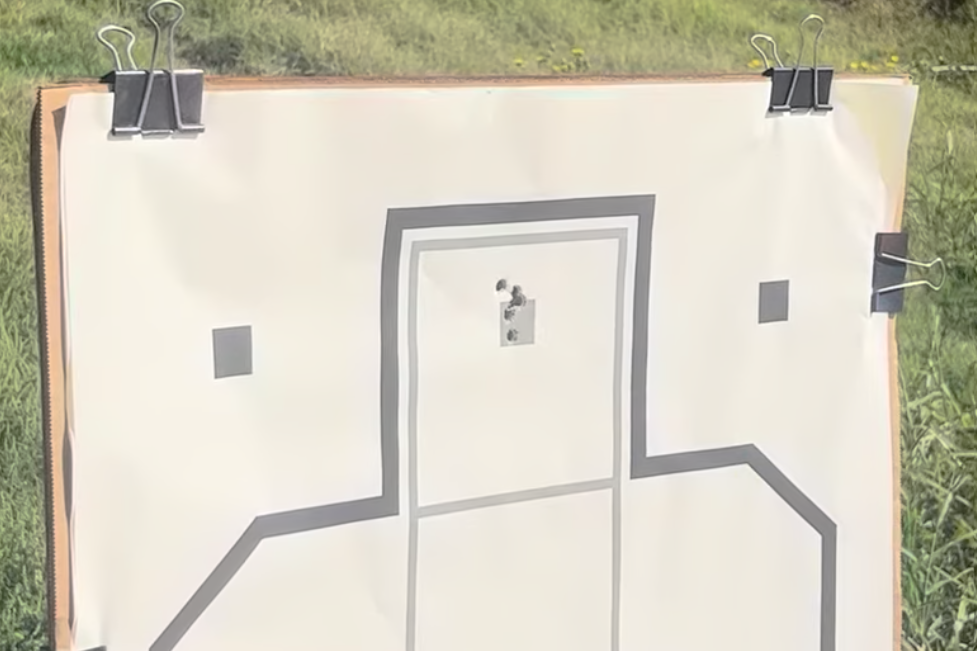
Most factory irons are zeroed at 25 yards. Why? Because it offers a forgiving margin of error. If you look at the data, a 25-yard zero results in a point-of-impact that is only one-quarter of an inch low at the 5-yard line. Even with a 10-yard zero, the offset remains negligible.
The Verdict: Don’t Hold Over


In a defensive scenario, a quarter-inch shift is literally smaller than the dot in your window. You couldn’t “aim small” enough to notice the difference if you tried.
So why do I personally prefer a 10-yard zero? It’s not about the math; it’s about the shooter. Thanks to the Dunning-Kruger effect, many people think they’re better shots than they are. Most people struggle to produce a tight group at 25 yards, making a true zero hard to confirm. A 10-yard zero is easy to verify, and out to 50 yards, it actually has about an inch less drop than a 25-yard zero.
The bottom line: At defensive distances, it’s still “minute of bad guy.” Stop worrying about the two-inch holdover—it doesn’t exist on your handgun.